Logic games for kids: what to play at home at 5, 7 and 10
Five studio games sorted by age, from a merge bakery to battleship. With a table for picking by age, honest round lengths and answers to the questions parents ask first.

Short answer: at 5 or 6, start with the merge bakery and tic tac toe on one screen. At 7 or 8, hidden object rooms and the checkers school work well. At 9 or 10, try the five hunting games and battleship. All five open in a browser, and a round lasts from one minute to twenty.
The ages below are a guide, not a pass. One child counts moves at five, another plays for the company at seven. Watch two things: whether your child holds a rule for longer than one move, and whether they come back to the table a second time.
When is a child ready for logic games
A logic game asks for three things: understand the goal, hold the rule in mind, and make a move without following the first impulse. At four, the rule survives until the next turn and the game falls apart. By five, turn taking appears. By seven, a child holds two or three conditions at once. By nine, they plan a couple of moves ahead.
A simple test before the first real game: play tic tac toe and watch whether your child waits for their turn without a reminder, and whether a draw ends in tears. If both are fine, pick something harder. If not, start with the bakery: there is no opponent there, so there is nothing to lose.
What works at 5 and 6
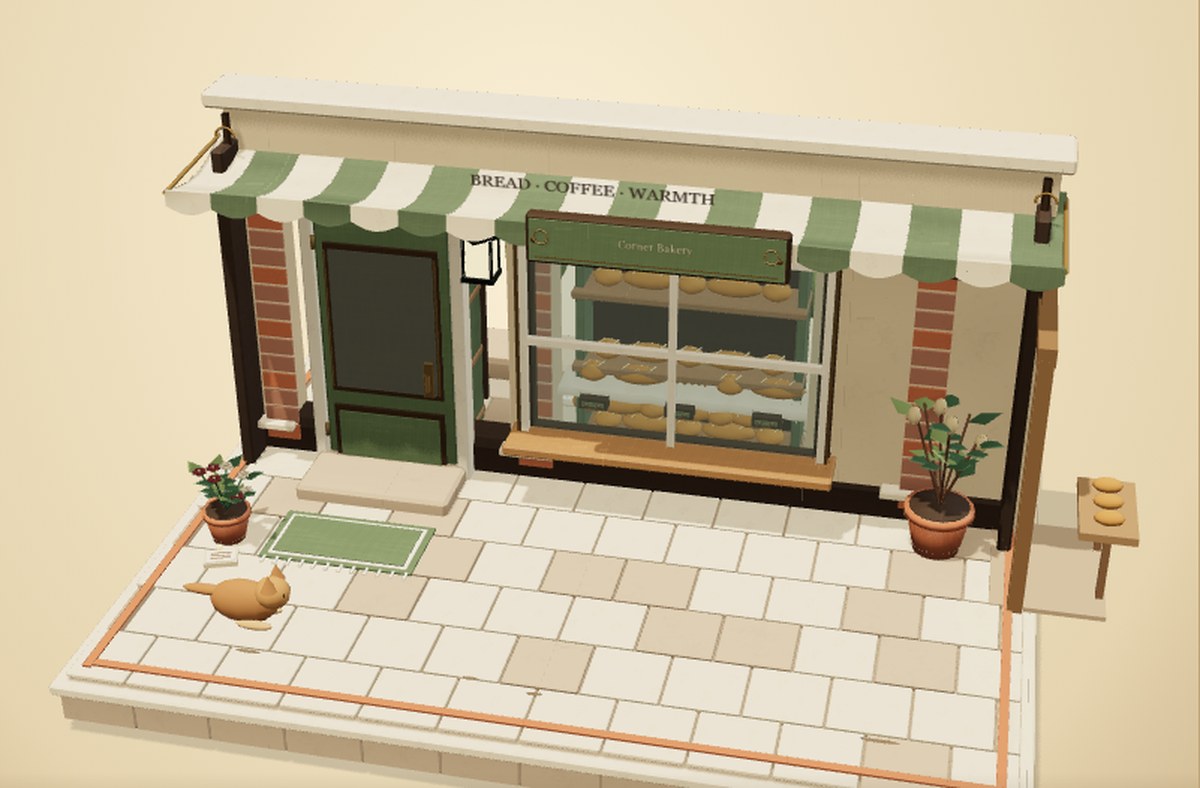
The bakery on the corner
Two identical items combine into a third, and two of those combine into the next one. Those combinations fill orders from neighbours, and the bakery rooms come back together piece by piece. For a five year old this is the first rule of logic without a single word: a pair turns into a new thing, and the cause is visible.
There is no opponent and the pace is calm. Orders arrive one after another, and furniture and recipes unlock as you play. An adult can just sit nearby and say out loud what just appeared.
Tic tac toe
The classic three by three takes half a minute to explain and less than a minute to play. One rule: put your mark down and stop the other player from getting three in a row. At five that is enough to understand turns and that the other side wants something too.
The classic ends in a draw when both players pay attention, and that can be disappointing. Switch to Vanishing marks: a fourth mark erases the oldest one, and the mark that will disappear next is drawn pale. The board never fills up, so the round ends with a win. Two players can share one phone and pass it back and forth.
Hidden object rooms
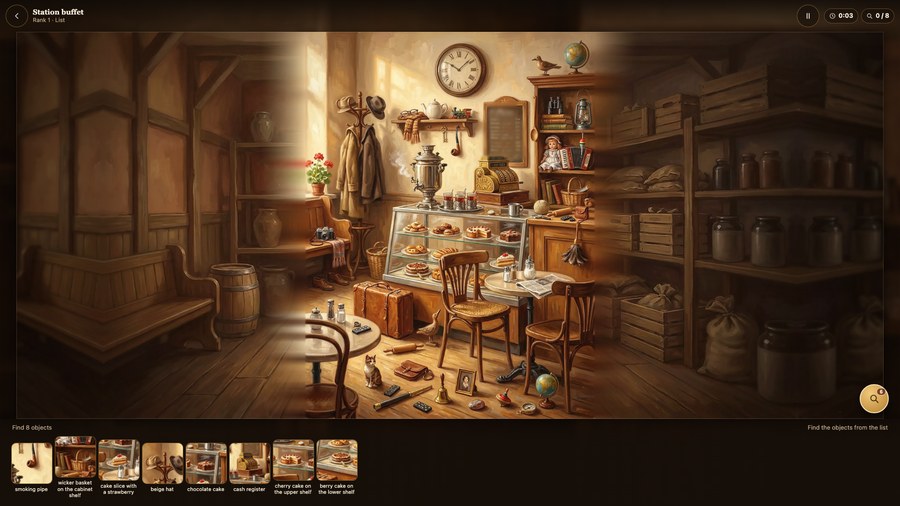
You search for items by name. Some rooms label the objects, others hide them behind riddles. At five, take the labelled rooms: the adult reads the name, the child finds it. One room takes five to ten minutes, there are twenty four of them, so the game splits nicely into short visits.
A miss on an empty spot costs a little time, which is extra pressure for a preschooler. The settings include a no countdown mode, and with it the search stays calm.
What works at 7 and 8
Checkers
By seven, a child holds the rule that a capture is compulsory, and checkers stop being just moving discs around. Checkers: Towers has nine rule sets: Russian, international on a hundred squares, giveaway, column Towers, Corners and more. Start with Russian: a simple piece moves diagonally forward, captures forward and back, and a king moves any distance.
At seven, short puzzles beat long games. Eighty puzzles with a winning move and a school of ten lessons give a clear answer in two minutes. The computer plays at three levels: the beginner blunders, the amateur sees threats, the master plays for real.
Hidden object rooms with riddles
At seven or eight, the rooms where the object is described rather than named are more interesting: "the thing that sharpens a pencil" instead of "sharpener". The child reads, searches by meaning, and keeps the description in mind while their eyes sweep the room. Six search modes change the task: a list, silhouettes, a dark room with a lantern, and pairs with no list at all.
What works at 9 and 10
The wolf and the sheep
Five old hunts on one board: wolf and sheep, fox and geese, tigers and goats, asalto, vulture and crows. The sides are not equal: the hunter has fewer pieces but captures by jumping over a neighbour, while the herd has to surround and lock it in. The game is about sacrifice: sometimes it pays to leave a sheep in the open so the wolf walks into a corner.
Five levels of computer opponent, from gentle to flawless, let a child improve without an adult. There are fifty puzzles with one correct move and a Trail of forty camps. Two players can share one screen.
Battleship
A ten by ten board and a fleet of ten ships. Ships never touch, not even at corners, and a hit lets you shoot again. The layout is hidden, so the round rests on probability rather than calculation: after the first hit the possible area shrinks, and a child learns to check squares in order instead of poking at random. The board size can be eight, ten or twelve squares.
The opponent is not only the computer. The cabin boy shoots at random, the navigator fires every other square and finishes a line, the admiral works out where the surviving ships still fit. Against a real person you play online, the game finds the opponent for you, and that needs two devices.
Tic tac toe: nine games
When the classic gets old, the same game opens Nine fields, where a move inside a small board sends the opponent to a particular small board, Five in a row on an eleven by eleven board, and Misere, where three in a row loses. These need planning two or three moves ahead, and a nine year old overtakes an adult faster than you would expect.
Pick by age
| Age | Game | What it trains | Round length | Device |
|---|---|---|---|---|
| 5-6 | The bakery on the corner | the rule that two make a third | 10-15 minutes | phone, tablet |
| 5-6 | Tic tac toe, classic | turns and the other player's plan | 1-3 minutes | one phone for two |
| 7-8 | Hidden object rooms | reading, attention, holding a description | 5-10 minutes per room | tablet, computer |
| 7-8 | Checkers, school and puzzles | calculating a capture | 5-20 minutes | computer |
| 9-10 | The wolf and the sheep | sacrifice and a plan two moves ahead | 10-15 minutes | computer, tablet |
| 9-10 | Battleship | probability and deduction | 10-15 minutes | two devices |
How long to play in one sitting
Fifteen minutes is plenty for a preschooler. A younger school child can take twenty to twenty five. At nine or ten, tiredness ends the session, not a timer. The signal is simple: if your child starts yawning or argues about every move, it is time to stop.
Logic settles better when there are two minutes of talk afterwards. Ask which move was a mistake and why. "I did not think" is an answer too: next time, look at the opponent's move first.
What to do when your child loses
Losing is part of the rule, not a verdict on the child. A calm adult matters more than any speech, so breathe first and analyse second.
- Play honestly, but not at full strength. A child notices deliberate losing and stops trusting the game.
- Discuss one move, not the whole round.
- Do not end on a loss: after the talk, play a short round of something easier.
- Praise the move, not the win: "you saw I wanted that piece and you closed the square".
In The wolf and the sheep one undo per round is free, which makes a good opening: "look, the wolf could have jumped the other way here".
What logic games actually train
Planning: a child keeps a goal in mind for two or three moves. Working memory: rules, bans and open squares are not forgotten between turns. Counting: in checkers and battleship you can see pieces disappear, and that changes the plan. Inhibition: wait for the other move and leave the piece you are not allowed to take. Speech: explaining a move out loud is harder than making it, and the explanation is what locks the logic in.
None of this appears in one evening. A game gives repetition, and repetition becomes a habit.
Common questions
At what age can we start?
A guide: five for the bakery and tic tac toe, seven for checkers and hidden objects, nine for the hunting games and battleship. Watch the child, not the number: if they hold turns and rules, try earlier.
Can a child play without an adult?
Yes, the bakery and the hidden object rooms need no adult. Checkers, tic tac toe, the hunting games and battleship all have computer opponents, so a partner is always available.
Are the games free?
Yes, all five are free. The studio site shows ads, and a purchase can turn them off, but nothing has to be bought to play.
Do we need to install anything?
No. The games open in a browser on a phone, tablet or computer, and nothing needs to be installed.
Does a phone work?
Yes, all five run on a phone. Battleship against a real person needs two devices, and checkers and tic tac toe are easier on a tablet or computer because the squares are bigger.
Can two people play on one device?
Checkers, tic tac toe and the hunting games, yes: players take turns. Battleship brings two real players together only online. The bakery and the hidden object rooms are single player.
What if the game is too hard?
Lower the opponent level, take a shorter round, or move to an easier game. In checkers start with the school and puzzles, in tic tac toe with the classic, in the hunting games with the gentle level.
Can we play with a friend online?
Yes. Checkers lets you create a room and invite a friend by link, code or QR code, and tic tac toe has a game with a friend online. In battleship the game finds an opponent for you.
All five games sit on the puzzle and logic games hub, with the board games hub next to it. If checkers caught on, the checkers rules guide walks through the board, and the board games for two article helps pick a game for a pair.