Bakery games online: cozy picks
Four kinds of bakery and cooking games, an honest look at timers and rush, and a browser bakery where you can merge ingredients and decorate at your own pace.

Short answer: bakery and cooking games look alike from the outside, but they ask for very different things. Some want you to beat a clock and keep a queue of orders moving. Others let you combine ingredients and furnish a room with no rush at all. For a quiet evening, pick a merge game or a decorating game, not a kitchen sprint.
We make Corner Bakery, so it is part of this list. Below is an honest guide to the genre: where the pressure comes from, where you can think, and what to choose for your mood. Other games are described plainly, with no rankings and no promises.
Running a bakery: orders, money, upgrades
This is the oldest shape of the genre. You bake, serve guests, earn money, open more tables and buy better equipment. The goal is not one good round but a bakery that grows: more shelves, more recipes, more customers.
The pace is set by the economy, not by you. There is usually an energy bar or a timer that refills over time, and sometimes a clock on each order. It is not a pure rush, but it is not a free evening either: the game quietly asks you to come back later and does not let you finish everything in one sitting.
A well-known example is Bakery Story: you bake, serve, decorate the shop and expand it step by step. If you enjoy planning and watching a small place get prettier, this loop works. If waiting annoys you, look at the next section instead.
Timed cooking: rush and coordination
Here the main resource is seconds. Orders arrive one after another, a dish is built in steps, and a mistake costs time or ruins the plate. The further you get, the more dishes are on the screen at once.
Cooking Fever is exactly this: restaurants from different cuisines, a queue of orders and timers. Cooking Mama turns cooking into a series of small tasks that follow a recipe. Overcooked goes further and makes the rush a team sport: one player chops, another fries, a third carries the plate, all under a clock.
These games are great with friends and they give a real thrill. They are a poor fit for a calm evening after work, because the stress is real even when the stakes are fictional. If you want to cook without the chase, look at merging and decorating.
Merging ingredients: the calm lane
A merge game is built on one action. Ingredients sit on a kitchen table. Drag two identical ones together and they become a new dish or a higher-level ingredient. Simple parts slowly turn into complex dishes.
There is no countdown pushing you forward. You decide whether to merge a pair now, wait for a harder order or clear space on the table. A mistake rarely costs the run, and it can almost always be undone. That is why merging works well in the background: with a podcast, on a commute, or for ten minutes before bed.
Cozy decorating: furniture and rooms
The second half of the genre is not cooking but place. You choose furniture, wallpaper and decorations, arrange objects and watch the room change. The mechanic is simple, yet it works: progress is visible as a picture, not as a number.
Decorating on its own gets thin quickly if there is no game behind it. It holds when it is tied to orders and restoration: you earn stars, open a new room and decide what the corner will look like. Then furnishing feels like a reward rather than a separate hobby.
Corner Bakery: how our game works
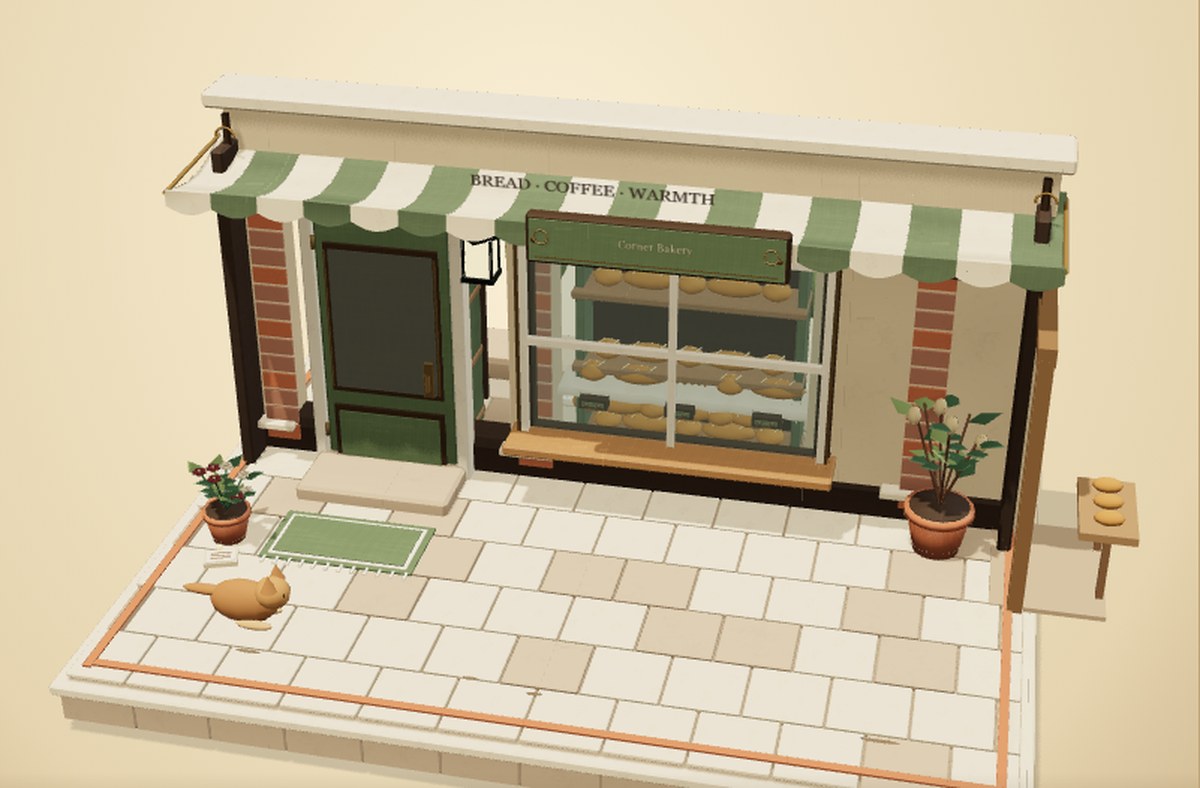
Corner Bakery puts merging, orders and restoration in one place. Identical ingredients on the kitchen table combine into new dishes. Neighbours order what you cook, and their orders bring coins and stars. Stars unlock recipes and bring the bakery's comfort back.
Then comes the decorating. You can choose furniture and decorations for different rooms, change the setting and watch a familiar corner come to life. You can stop at any moment: orders and progress will wait.
The game is free to play. Coins, stars and energy are earned in the game. The shop offers separate top-ups and mixed sets for money: you confirm every purchase, and there are no subscriptions or automatic charges. Sets can be bought again, and energy from a set stays in reserve, ready to use when you choose.
On the website the bakery is saved in the browser and in the cloud, and signing in helps you open it on another device. In Telegram, Max, VK and OK each platform has its own bakery with separate progress and purchases. Keep that in mind if you play on more than one device.
You can start playing right away: nothing to install.
Genre landmarks
These games show what the genre can do. Most of them are apps or games for a computer or console rather than pages in a browser.
- Bakery Story. A bakery management game: baking, guests, decorating the shop and expanding it. A good example of how far a simple loop can go.
- Cooking Fever. Cooking in restaurants from different cuisines, with orders and timers. It shows how a small set of actions becomes a tense session.
- Good Pizza, Great Pizza. A pizzeria game with orders, conversations and a story around a small business. Speed matters, but so do the characters.
- Cooking Mama. A series of cooking mini-games where a dish is built step by step. Useful for seeing how cooking turns into short tasks.
- Overcooked. A cooperative kitchen under a clock, where players split roles and get in each other's way. The best example of team rush, and definitely not a quiet evening.
How to choose a bakery game
| What to check | Why it matters | How to test it in a minute |
|---|---|---|
| Pace | Not everyone wants a timer | Play the first order and look for a countdown |
| Energy | It slows the game more than it seems | See how long the next action takes |
| Ads | Banners and videos break the mood | Open the first screen and the settings |
| Paid extras | Top-ups and sets change the pace | Check the shop before you get attached |
| Saving | Browser progress disappears when you clear it | Look for an account or cloud save |
| Platform | Progress can be separate on each platform | Confirm where you actually play |
| Screen | Small buttons are hard on a phone | Try dragging and zooming |
| Pause | Sometimes you just need to close the tab | Check whether you can stop without losing progress |
Frequently asked questions
What is a bakery game? A game where you bake, fill orders and grow your own place. The mechanic varies: management, timed cooking, merging ingredients or decorating.
Are there free bakery games? Yes. Many can be started for free, and purchases are optional. In Corner Bakery, coins, stars and energy are earned in the game, and the shop only offers voluntary top-ups and sets.
Why do cooking games use timers? A clock creates tension and stops players from finishing all the content in one evening. If you do not want the rush, look for a mode without a countdown, or try merging and decorating games.
Can I play on a phone? Yes, most of these games run in a mobile browser or as an app. Check that dragging items with a finger feels comfortable.
What makes Corner Bakery different? It is a browser merge game: ingredients become dishes, neighbours place orders, and stars unlock recipes and decorating. Purchases are optional, there are no subscriptions, and progress is saved in the browser and in the cloud.
Do I need to install anything? No. The game opens from a link in your browser. To keep progress on another device, sign in to an account.
The short version
If you want a calm evening without timers and rush, start with Corner Bakery. If you want to understand the merge genre and its honest downsides, read our guide to merge games. And if you are in the mood for a different kind of quiet game, browse the puzzle collection.