
Passing Durak
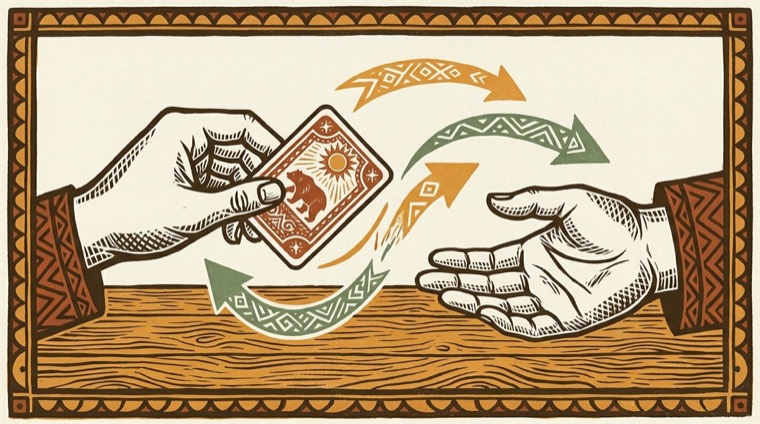
Passing changes the game more than it seems. Instead of defending, you hand the attack on around the table, and suddenly your neighbor is dealing with the cards that were meant for you.
How it differs from throw-in Durak
In throw-in Durak (podkidnoy), the defender must either beat the card or take it. Passing Durak (perevodnoy) adds a third option: put down a card of the same rank next to it and pass the attack to the next player.
A simple example. You are attacked with a nine, and you have a nine of your own. You put it on the table and pass. Now your neighbor has to defend, and against two nines at that.
Rules of passing
- You can only pass with a card of the same rank as the one on the table.
- You can pass only while you have not beaten any card yet. Once you start defending, the right to pass is gone.
- You cannot pass more cards than the next player has in hand.
- Some groups allow passing with a trump, others forbid it. Agree on this before you start.
After a pass, the player who passed counts as the attacker, and they are the one who can throw in.
When passing saves you
First and most important: when you hold a pair or three of a kind and have nothing to beat with. Giving away a nine and keeping your trumps is almost always better than beating with a trump in the first round.
Second: when the next player has few cards. Passing to someone with two cards often ends with them taking everything and ending up with a full hand.
Third: at the end of the game, when the deck is empty. Here every extra round works against whoever has more cards, and passing helps you avoid trading trumps.
When not to pass
If after passing you are left with junk and your strong cards are already gone, you have just made your hand worse. Passing is not free: you spend a card.
Passing to a player with lots of trumps is a bad idea. They will defend, and you lose both the card and the initiative.
One more thing: passing reveals your hand. An attentive opponent will remember that you had a pair and will start working out what you do not have.
How it changes the game
With passing, games get longer and fiercer. Cards travel around the table longer, the discard pile grows more slowly, and what decides the game is more often not the strength of your hand but your ability to keep track of who has what left.
It is easier for beginners to start with throw-in Durak and turn on passing once they no longer have to think about the rules.
Play with passing
In "Durak: The Journey", passing is turned on in the settings, and the Mentor will tell you when it pays off.